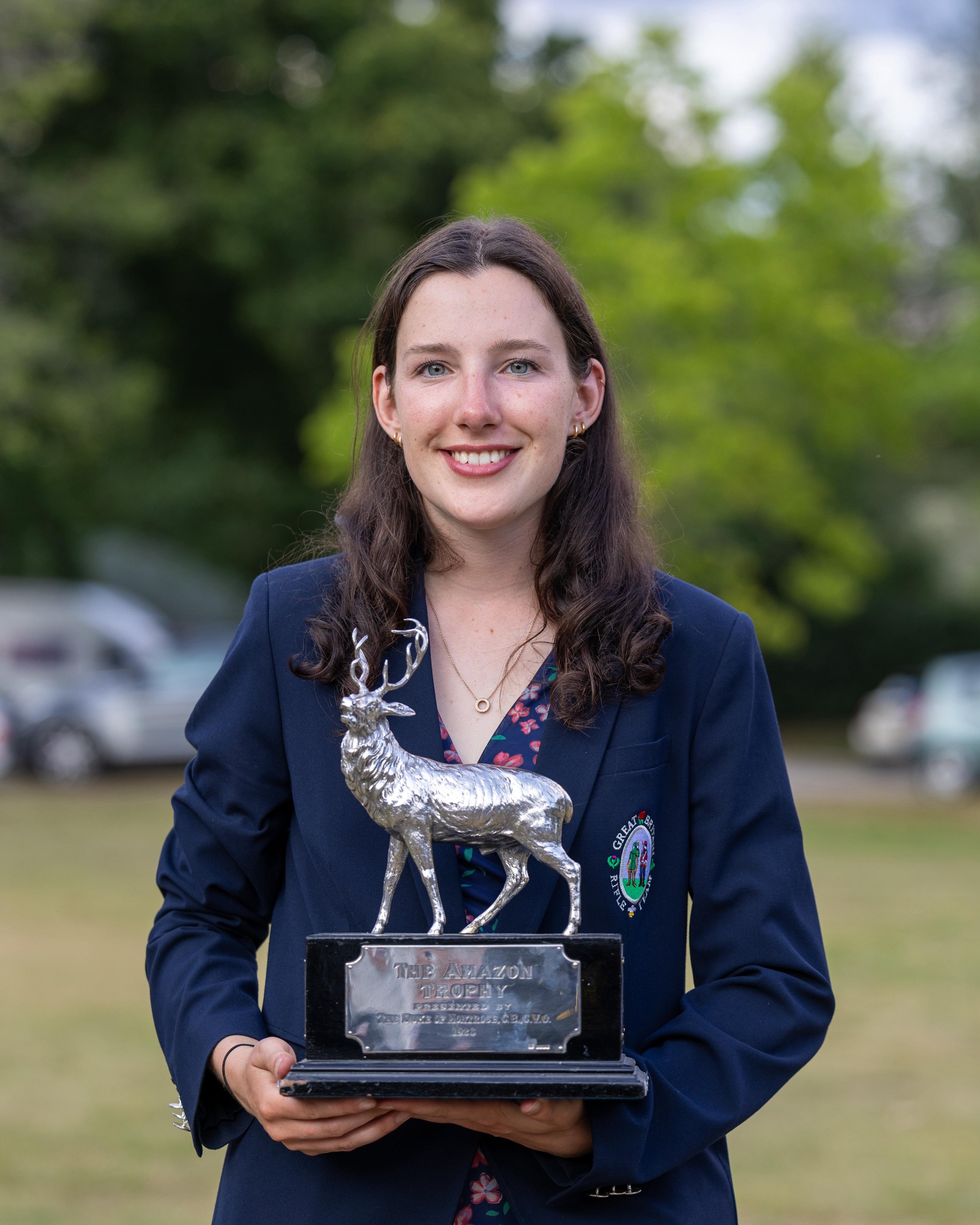
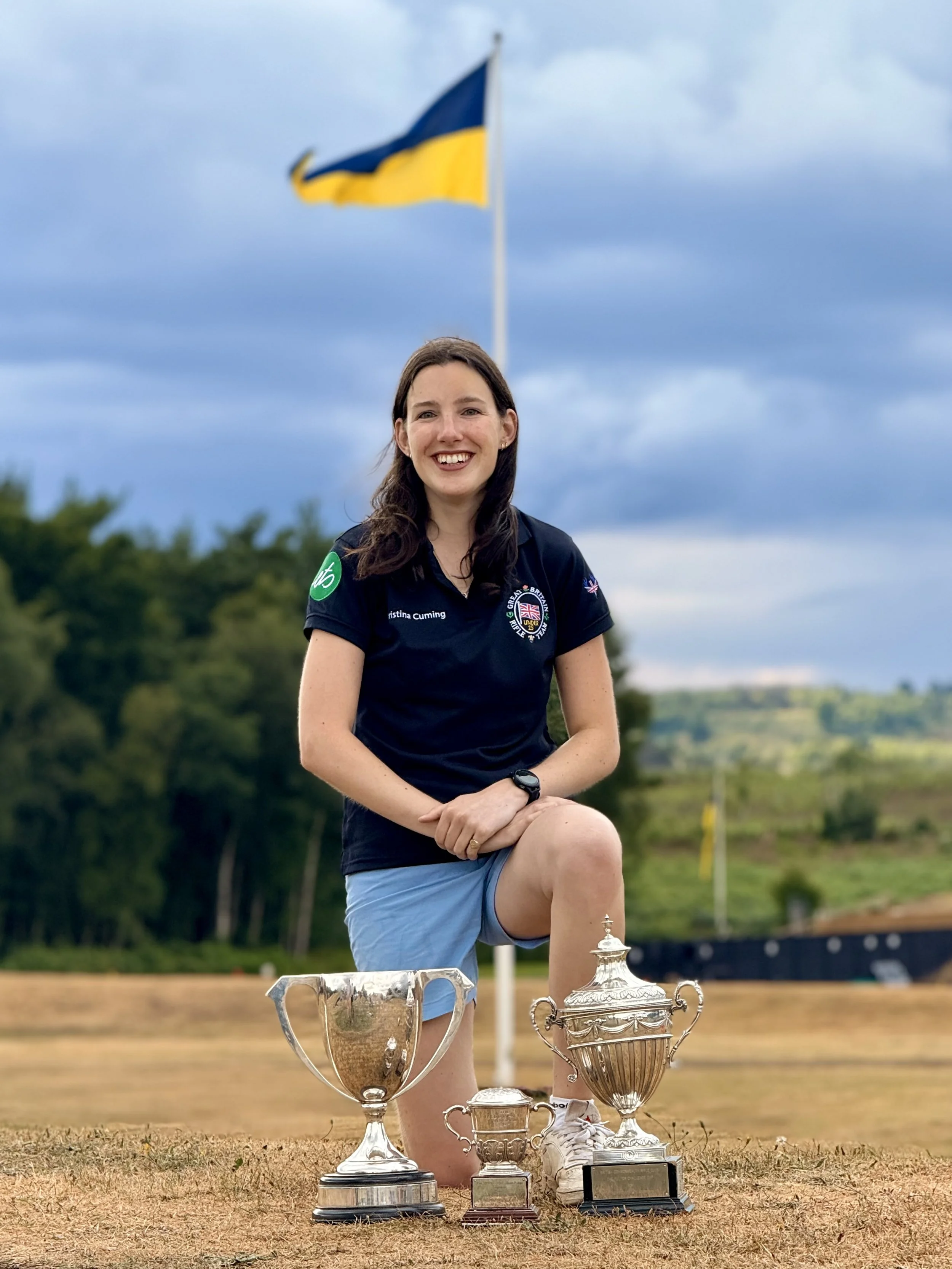
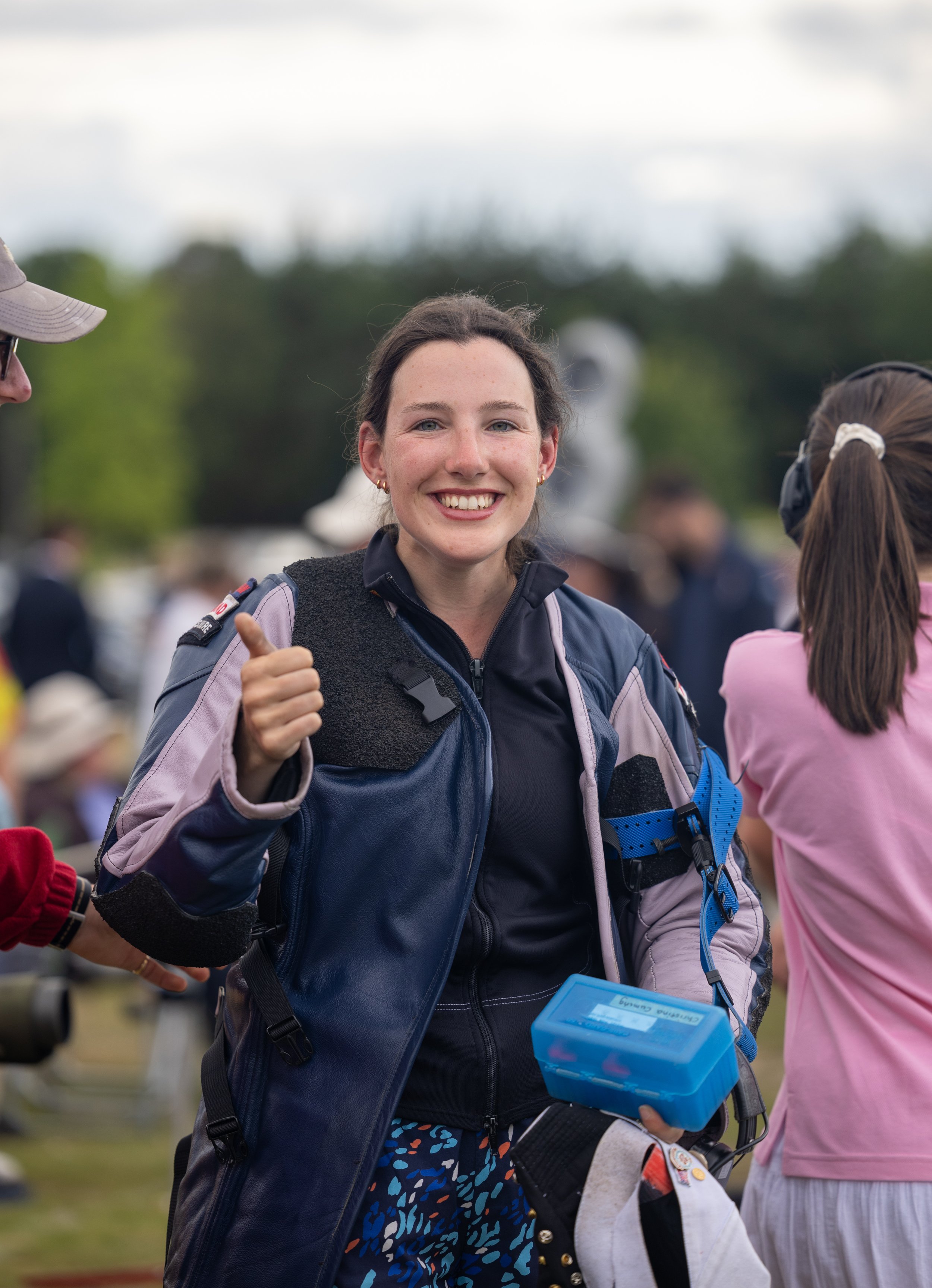
May Profile: Christina Cuming
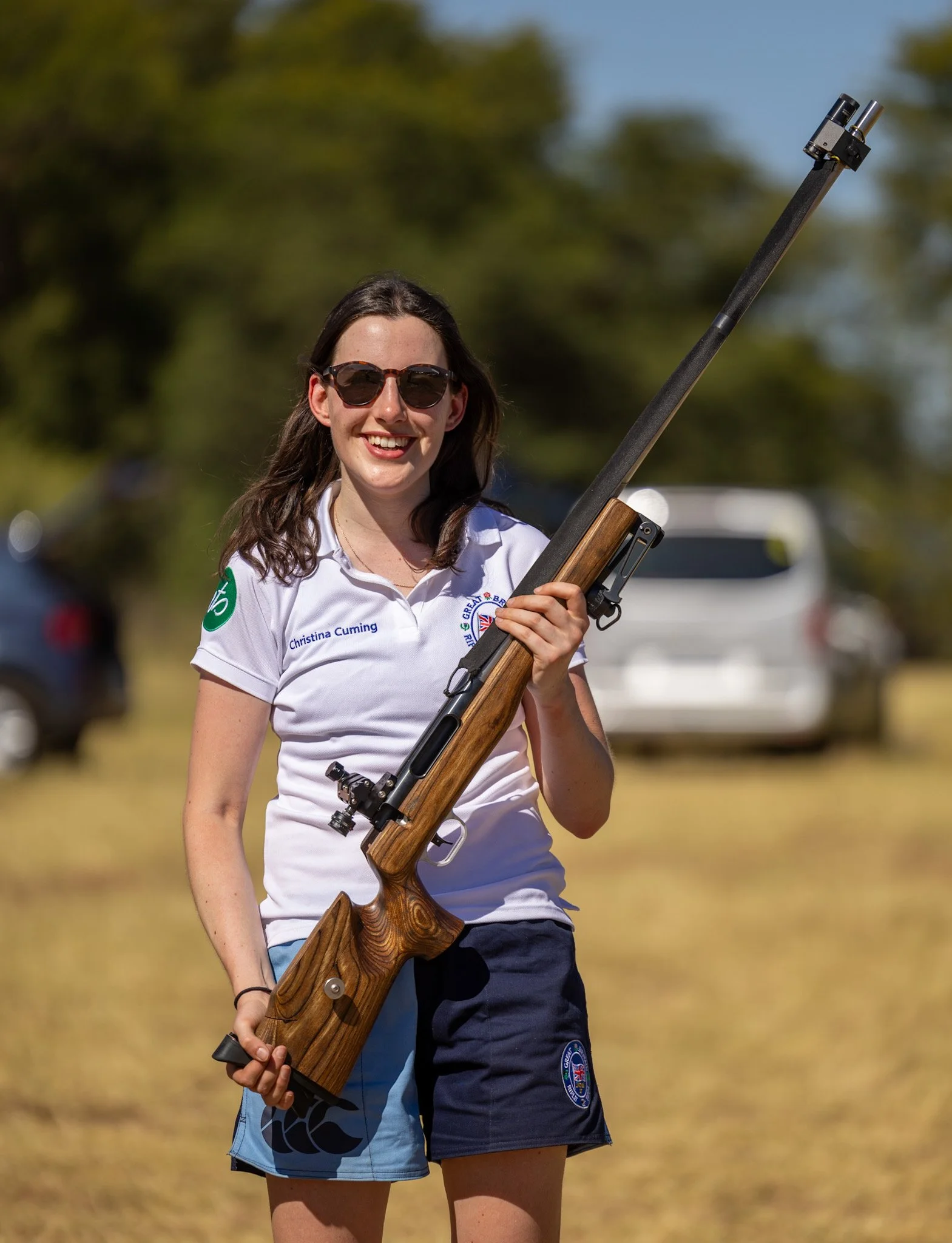
Why join a five-a-side football team, play netball, or go to the occasional pilates class when you could shoot at targets up to 1,000 metres away with a 7.62 rifle using iron sights with no magnification, usually while lying in the rain, wind, or blistering heat (or all three at once) wondering whether a tiny change in mirage has just cost you a point? This month we spoke to GB World Championship rifle shooter Christina Cuming, to hear more about her love and dedication to a sport many won't have considered or even heard of.
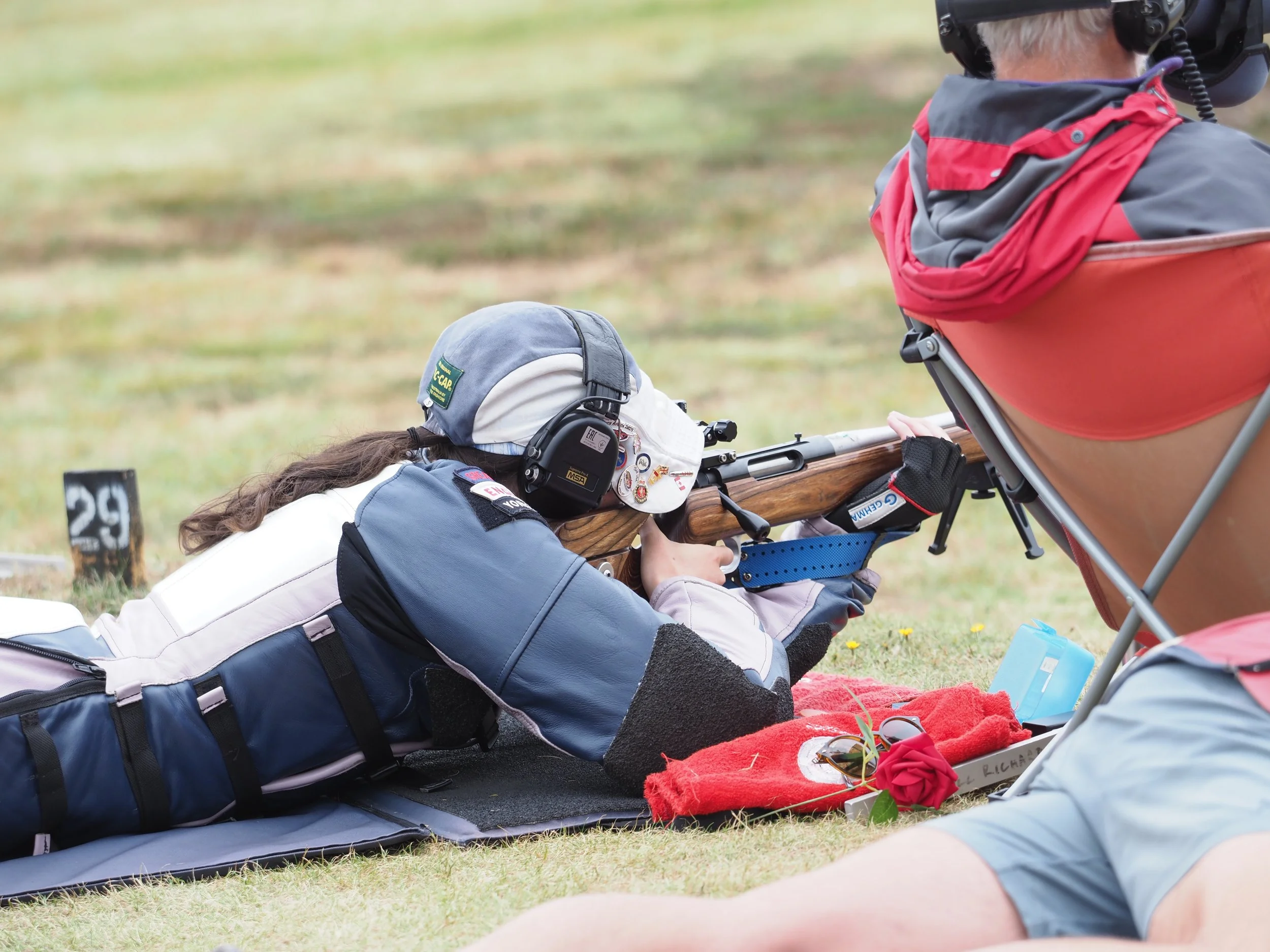
Target rifle shooting is not a sport that lends itself particularly well to casual explanations. It is highly technical, deeply obsessive, and involves an alarming amount of discussion about wind, ammunition, elevation, and an inordinate amount of excuses for why a shot strayed from the centre of the target. It also requires an enormous level of concentration. On the firing point, everything else drops away. The outside world becomes irrelevant. There is only the rifle, the target, and the increasingly strong suspicion that the wind has changed again.
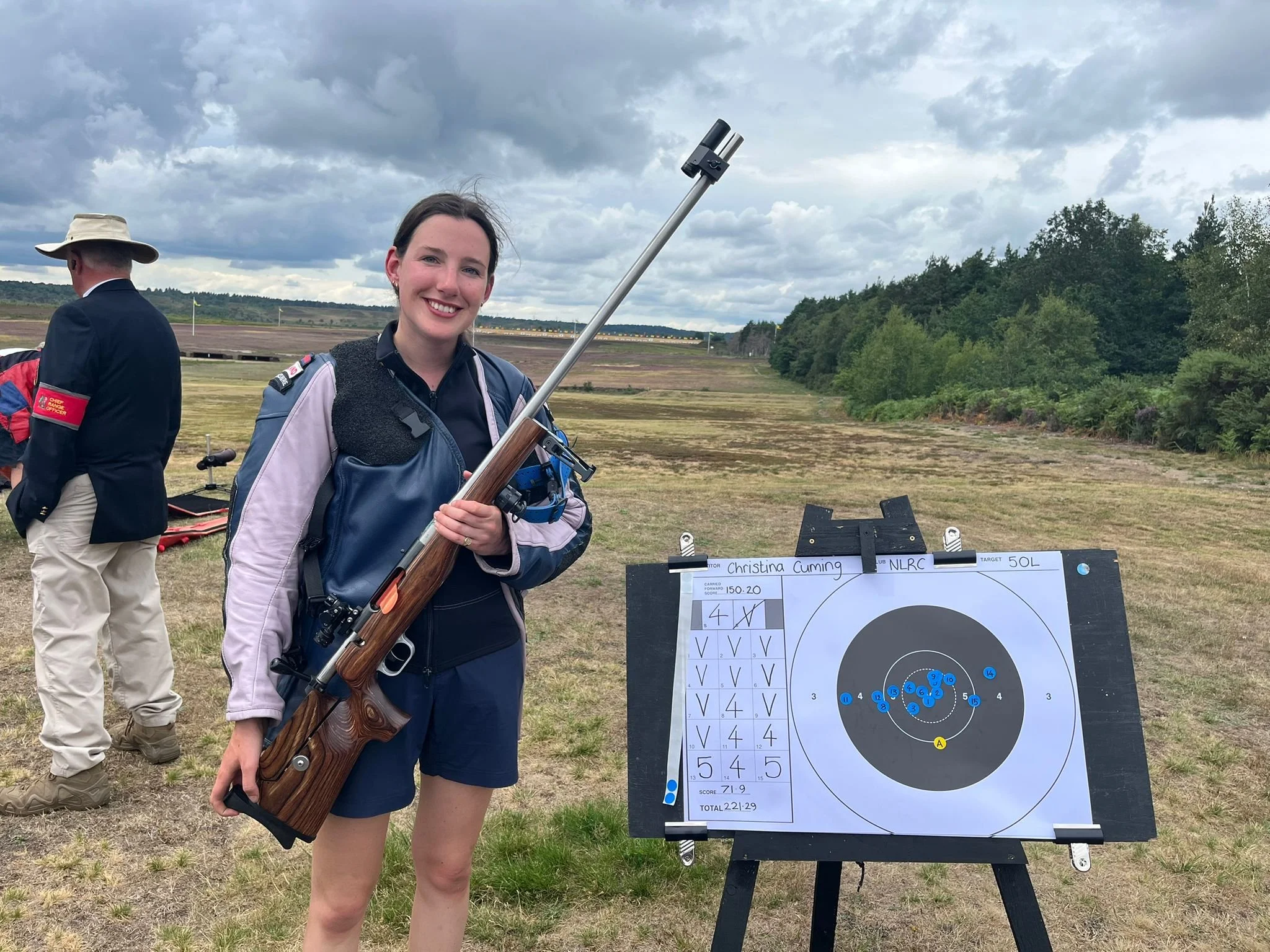
Christina first got involved in shooting through the cadet force at school at the age of 14, where an excellent ex-Marine coach introduced students to the sport and worked hard to make the team welcoming and accessible, particularly for girls entering what remains a heavily male-dominated discipline. Through school she was selected for the GB Under-16 and Under-17 teams, touring to Canada and Jersey to compete against international cadet rifle teams. She later went on to Durham University, where she captained the rifle club while voluntarily spending her Easter and summer holidays coaching her old school team back at Bisley. The National Shooting Centre at Bisley is the UK’s main centre for target rifle shooting, hosting national and international competitions, training and shooting clubs.
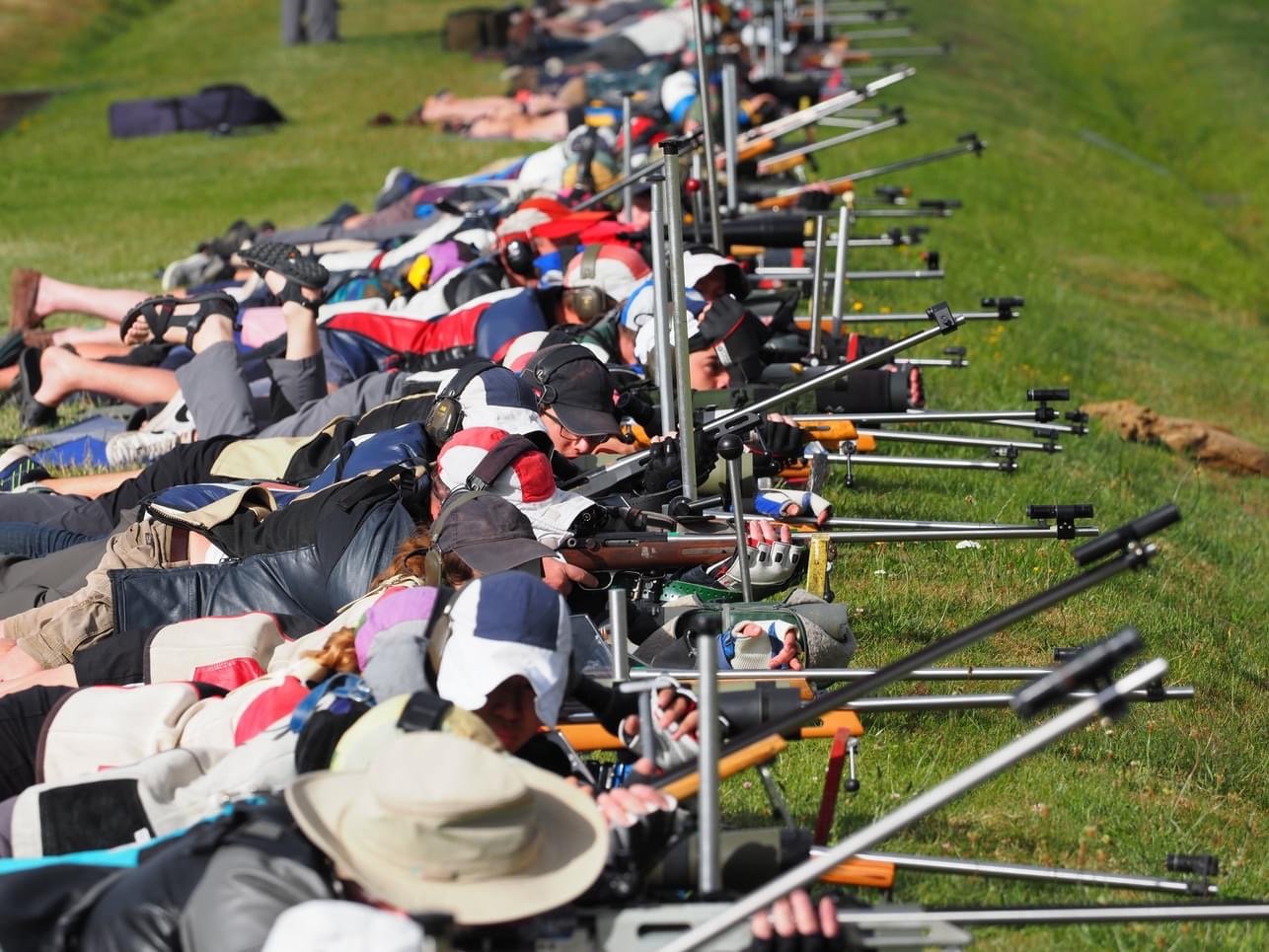
One of the major fixtures of the cadet shooting calendar is the Ashburton Shield, a historic schools competition that has been running for well over a century. For many young shooters it represents the pinnacle of school rifle shooting, combining pressure, tradition, and the uniquely British experience of trying to perform intricate technical tasks while soaked to the skin. Christina particularly enjoyed coaching younger shooters through this environment and helping them build confidence in the sport. She remains passionate about encouraging more girls to get into target rifle shooting, where women are still significantly underrepresented, especially at higher competitive levels.
Her first match representing England came at the age of 18, followed shortly afterwards by selection for her first full Great Britain tour to Canada at 20. In a touring team of twenty shooters, only three were women. While competing there, Christina top-scored the Canada Match against the Canadian national team.
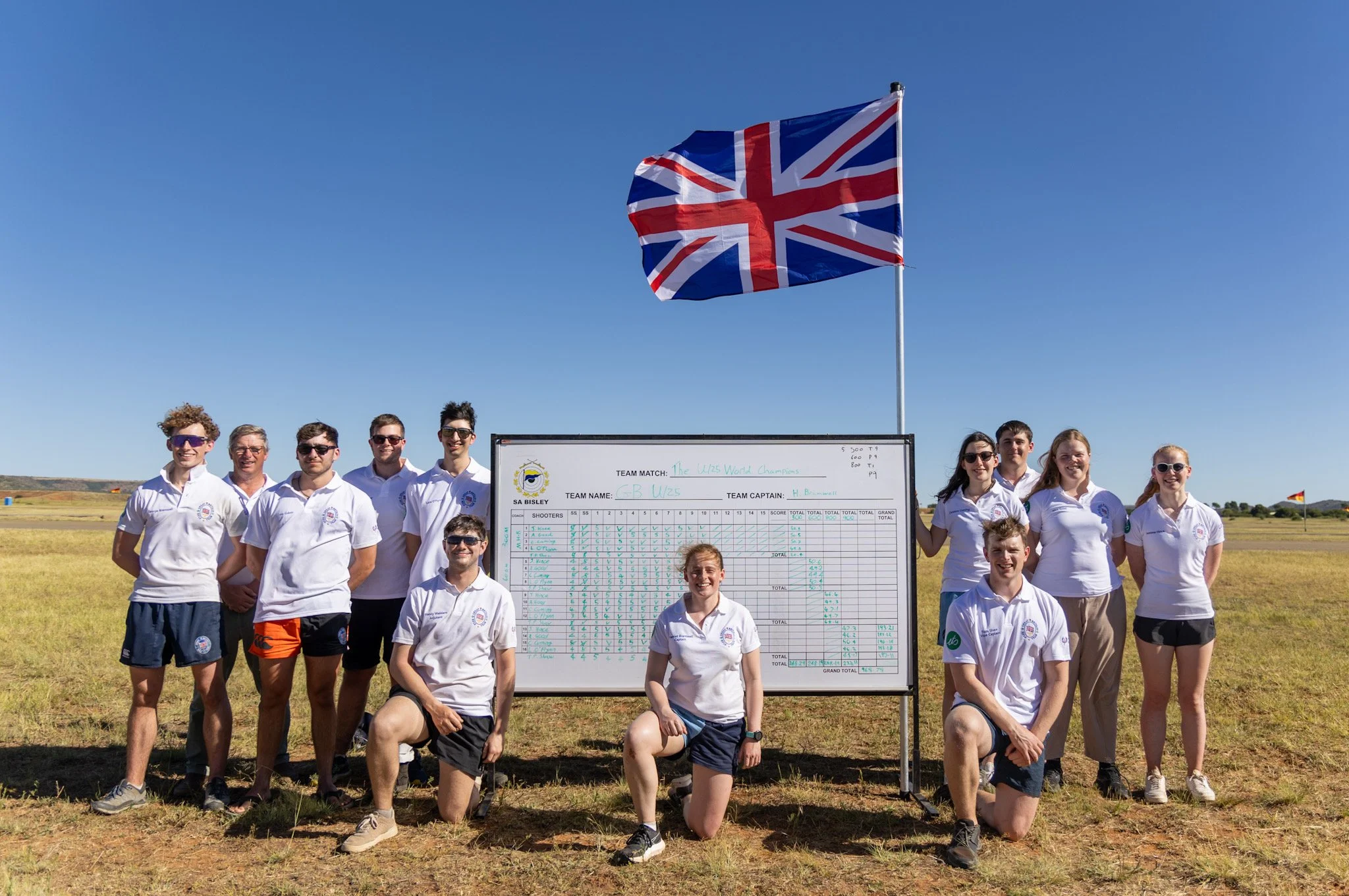
Her next major tour took her to South Africa for the ICFRA Under 25 World Championships. Leaving mid ski-season where she was working as a cook, she spent three weeks competing alongside a close-knit GB U25 squad who managed to win themselves first place in the U25 World Championships.
She is now part of the GB squad training towards the 2028 World Championships and is due to tour Australia with the GB team in October 2026. Again, in a squad of twenty, only three are women. It is a statistic Christina mentions not as a complaint, but as a reminder that visibility matters. One of the biggest barriers to entry in shooting is simply the assumption that it is “not for people like me.” She hopes that by competing, coaching, and remaining visible within the sport, more young women might feel encouraged to give it a go.
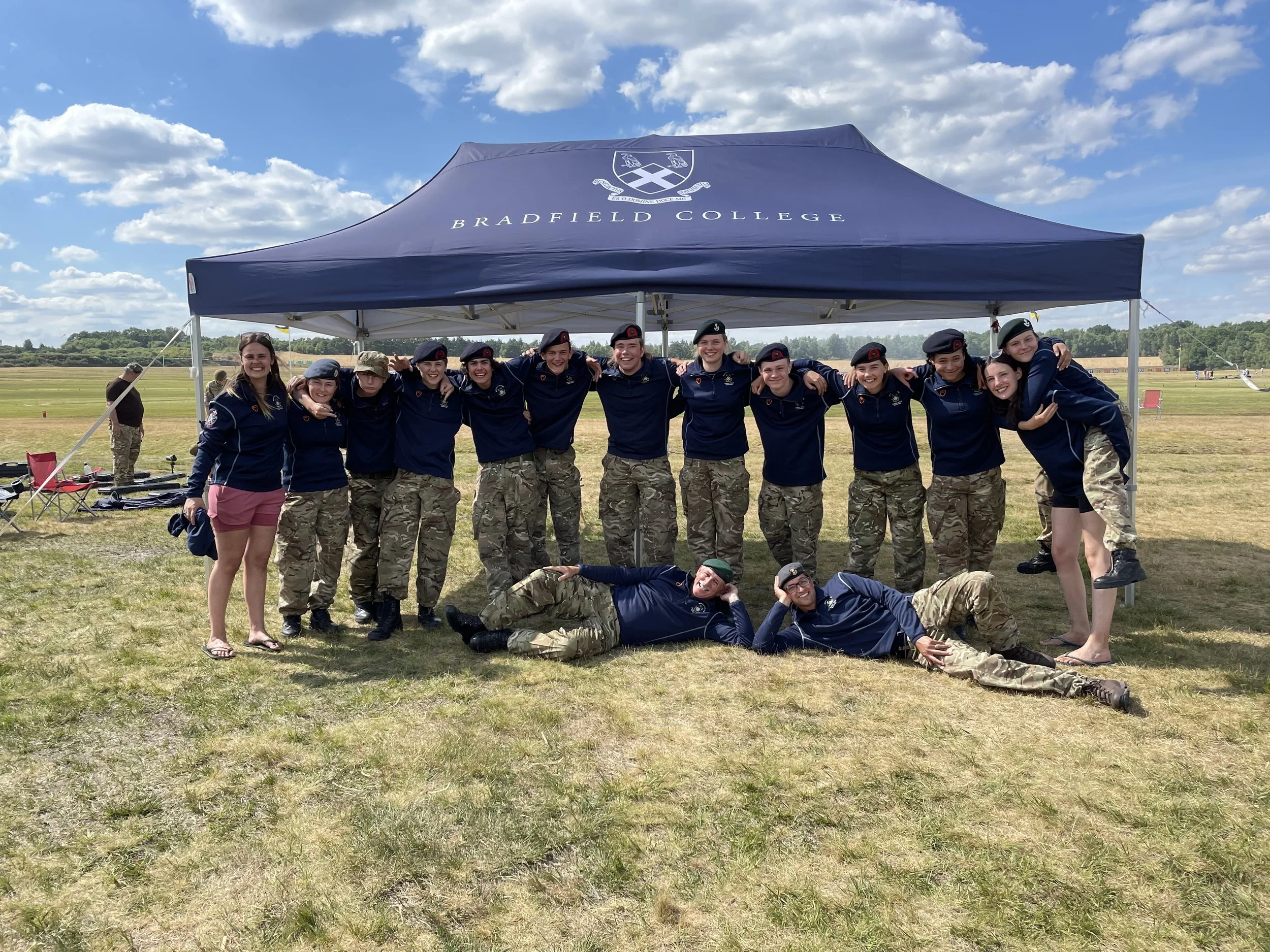
What Christina values most about target rifle shooting, however, is not necessarily the medals or international tours, but the people. Despite the intense competitiveness of the sport, the community around it is remarkably supportive. Shooters of all levels and ages compete alongside one another, from complete beginners to some of the most experienced marksmen in the country, and there is a strong culture of sharing advice, helping others improve, and collectively suffering through difficult weather conditions.
It is a sport held together largely by goodwill, fundraising, and people quietly giving up significant time, money, and annual leave simply to keep competing. Unlike many elite sports, target rifle shooting is heavily self-funded. Competitors balance training and international competition alongside full-time jobs, studies, and normal life commitments. Equipment, ammunition, travel, and training are expensive, and most shooters quietly absorb significant personal costs simply because they love the sport enough to continue.
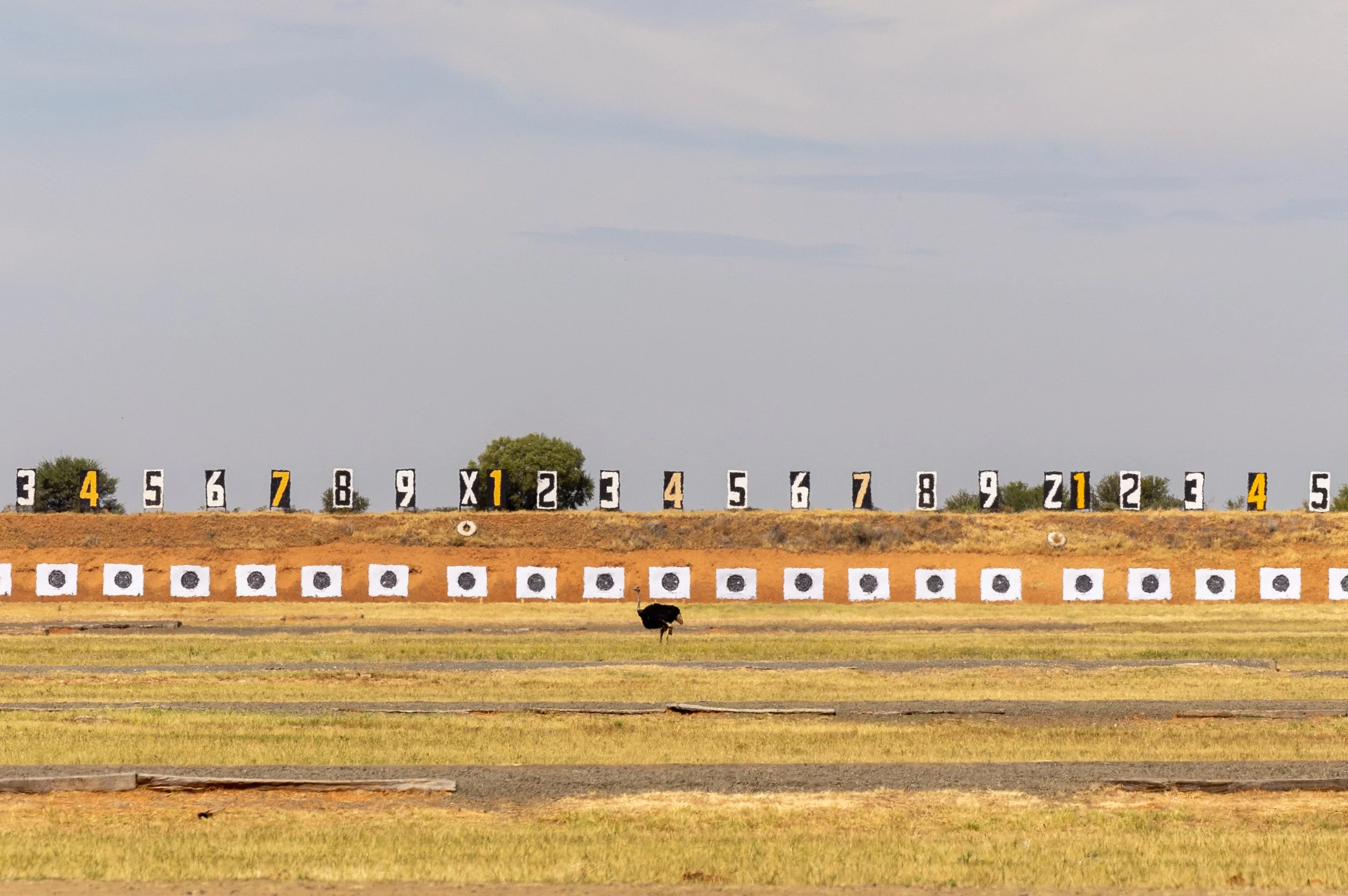
Outside shooting, Christina now works as a trainee accountant in London. Balancing work alongside international competition is not always glamorous and generally involves annual leave disappearing into training weekends and trying to explain to colleagues why she occasionally flies across the world to spend days lying on the floor looking through iron sights.
Still, for all its oddities, target rifle shooting remains a uniquely rewarding sport. It demands precision, resilience, patience, and an ability to stay calm under pressure - qualities that tend to transfer surprisingly well into the rest of life. It also creates the sort of friendships that only really emerge from travelling internationally with a group of equally sleep-deprived people carrying several tonnes of equipment between ranges in extreme weather conditions.
And, occasionally, if everything goes right, you hit the middle.